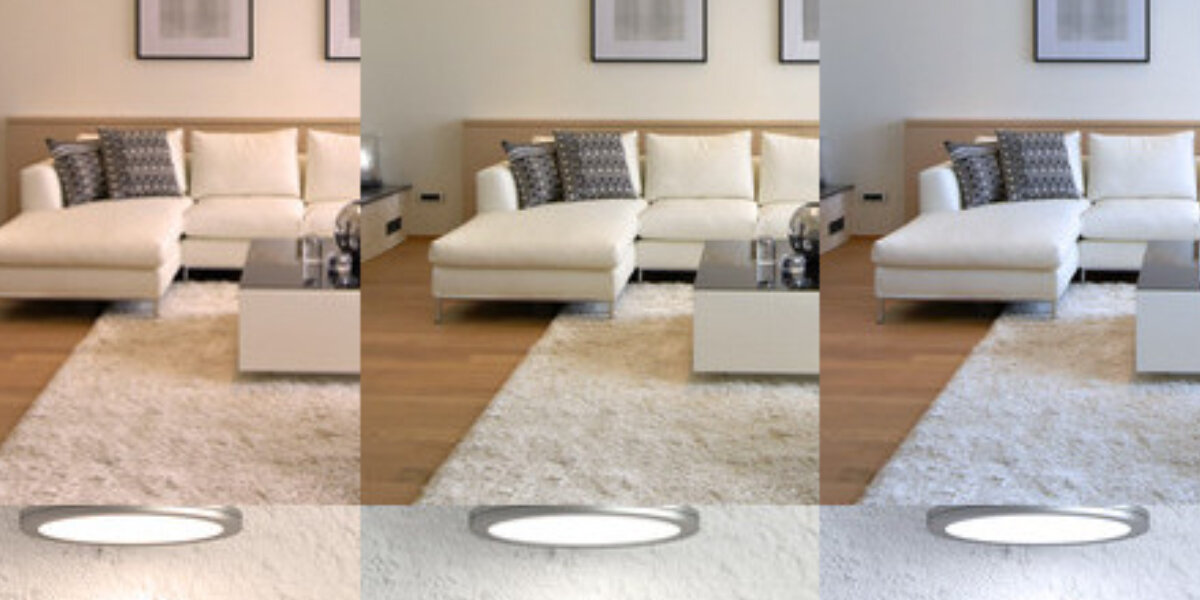

It has been proven that the wrong workplace lighting can lead to a sharp decline in performance and a higher rate of errors and accidents. That's why it's important to counteract poor workplace lighting.
But What Does "Poor" Lighting Mean?
In general, an inadequate lighting concept can be caused by the absence of daylight. Legislation also calls for sufficient natural sunlight. Neither a workplace with too little light nor one without shade from the sun is an ideal solution. The installed lighting must neither blind nor reflect into the eyes the employee.
Ergonomic Workplace Lighting:
Ergonomic and thus desirable workplace lighting is made up of four components: The direct and indirect lighting, work space lighting and the influence of daylight. Direct lighting such as spotlights should be installed at the sides or directly above the workspace so that the luminaires do not blind. The basic brightness in the room should be provided by indirect lighting in the form of ceiling and wall lighting, and the desk lighting should ensure that lighting can be individually adjusted to requirements.
Illuminance is measured in lumens per square metre and is an indicator of appropriate brightness. For healthy and younger workers, a lux figure of 500 is considered optimal; older people need 750 to 1500 lux in the office.
The following is a rough measure of the lighting required at different workplaces: In storage rooms, where the nature of the work tends to be classified as rough, illuminance should be around 50 to 200 lux. For manual work such as drilling, a lux level of 200 to 300 is advised. For finer work such as reading or writing, illuminance should be 500 to 750 lux and for very fine work even 1000 to 2000.
Positive Effects of Proper Lighting
Natural daylight has a motivating and stimulating effect on our body. This is because our circadian rhythm is largely determined by the course of the day's light. Above all, however, our sleep/wake rhythm is influenced by the time of day and the season.
In addition, natural sunlight stimulates our body to produce vitamin D. Especially in winter, when sunlight is scarce, sufficient lighting at the workplace is essential for our well-being.