The Decomposition of White Light into Spectral Colours
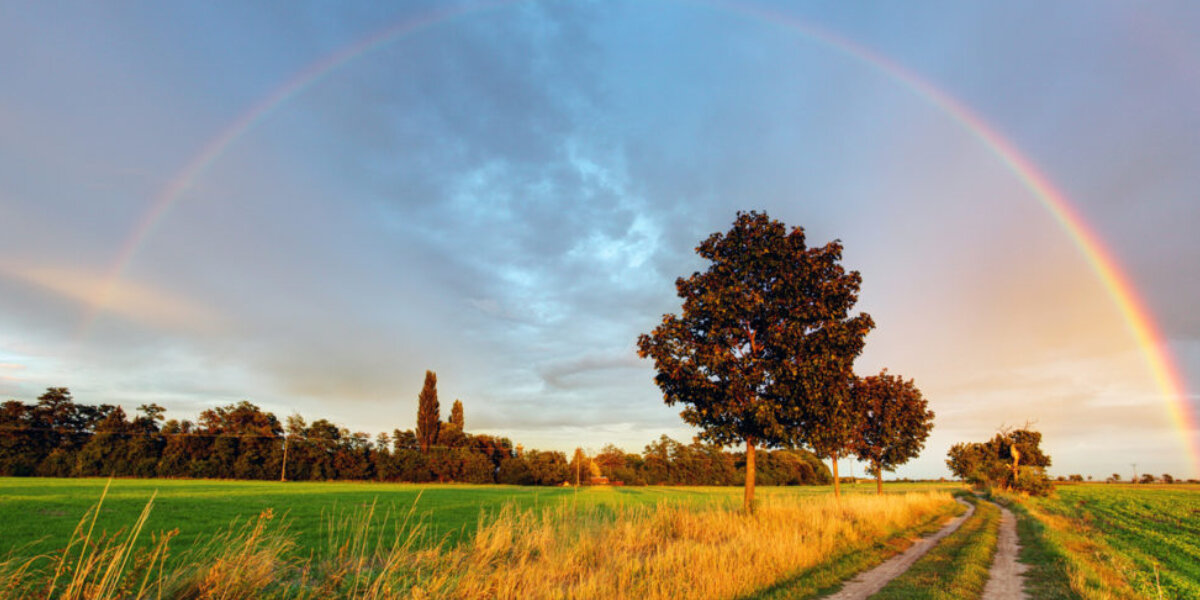
The first person to scientifically document the breaking up of light into spectral colours in 1676 was Isaac Newton. He used a prism and allowed sunlight to fall on it, whereupon the light was broken down into different colours. There are actually around 300 spectral colours that can be distinguished by humans; however, the term is often only associated with the rainbow colours red, orange, yellow, green, blue, indigo and violet. Incidentally, the term "rainbow colours" was not chosen by chance. It is closely related to the phenomenon of light refraction through a prism: The sun provides white light; the raindrops act as a prism and thus ensure that the light is broken down into its spectral colours.
The Indecomposability of Spectral Colours
When white light hits a prism, the spectral colours are created, but what happens when the spectral colour hits a prism again? Does the human eye recognise new colour changes? Spectral colours are pure colours, i.e. they cannot be broken down into other colours. If the experiment with the prism were repeated with spectral colours instead of white light, no new colours would be created.