As outdoor lights are exposed to wind and weather, they must be well protected. Rainfall, in particular, can be harmful to the lamps on your property. Dust and solid foreign objects can also damage the lamps. You can tell how weatherproof and durable a lamp is by the specified IP rating. We’ll explain what the numbers mean and which IP rating is just right for outdoor use.
What does ‘IP rating’ mean?
The abbreviation ‘IP’ stands for ‘International Protection’. However, it is also sometimes called “Ingress Protection”. Ultimately, the main concern is whether moisture or foreign objects can penetrate the housing and damage the electrical components there.
The IP rating consists of two digits, so that lamps are labelled, for example, as IP20 or IP44. The first digit refers to protection against solid objects and protection against contact, the second to protection against moisture. The digits define the requirements placed on outdoor lighting.
The required appliance class of an outdoor light depends on the specific conditions at the installation site.
The IP appliance class for outdoor use
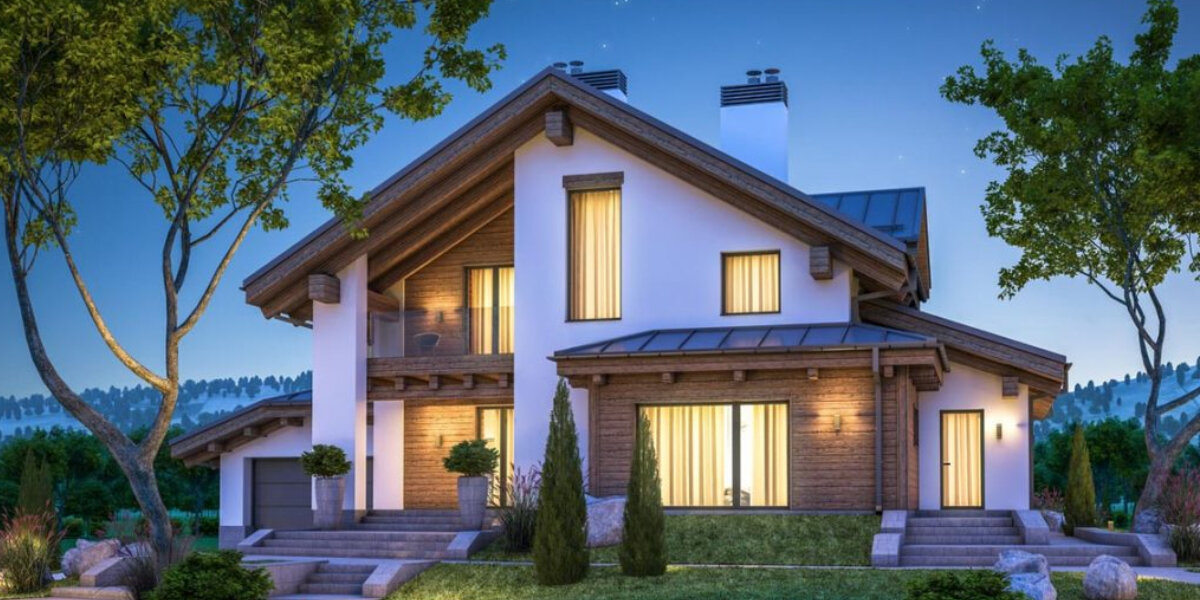
The site conditions for outdoor lighting can, of course, vary greatly: an outdoor wall light under a canopy is less at risk from moisture than underwater lighting for a garden pond. Similarly, an outdoor light on a paved driveway suffers less from dust than a lamp installed directly next to a dusty garden path. But which appliance class is the right one for which requirement?
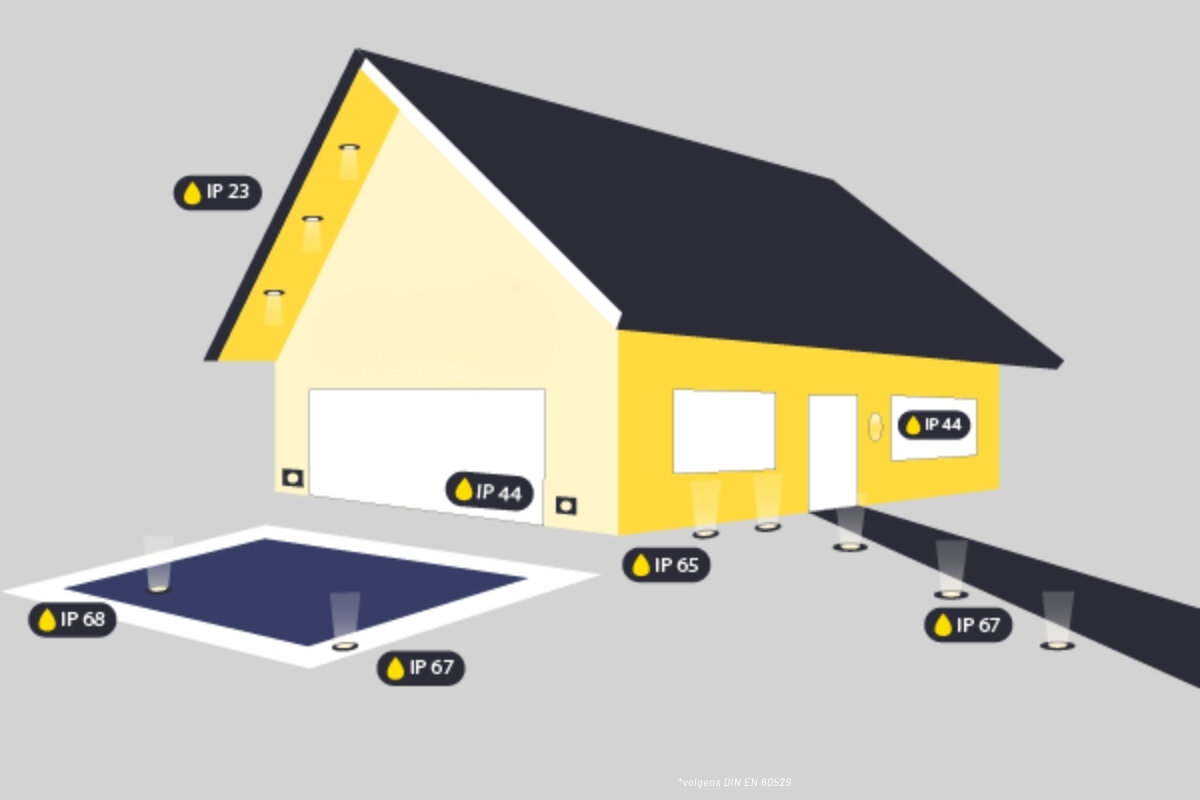
Appliance class IP 23
If the lamp is installed directly under a roof overhang, it should have at least an IP 23 appliance class. Only then is it protected against large foreign objects with a diameter of 12.5 mm and resistant to dripping water hitting the lamp at an angle of up to 15 degrees.
Appliance class IP 44
If you wish to install a lamp on a covered house wall, it should have at least an IP 44 appliance class to protect against solid foreign objects with a diameter of 1 mm and to be splash-proof. Only then will rainwater pelting against the building not damage the lamps.
Appliance class IP 65
Path lights or outdoor spotlights located on the ground beneath an overhang should comply with IP 65 appliance class. This ensures the lamps are not only protected against jets of water but are also dust-tight. IP 65 lamps can, for example, be hosed down with a garden hose without any concerns.
Appliance class IP 67
If there are floor lamps on your property that are not protected by a canopy, they should have a protection class of IP 67. This means they can withstand heavy rain and will not be damaged if they are temporarily completely submerged in water.
Appliance class IP 68
Lights with a IP 68 protection class will even function if installed permanently underwater. They are therefore ideal as pond lights in the garden.